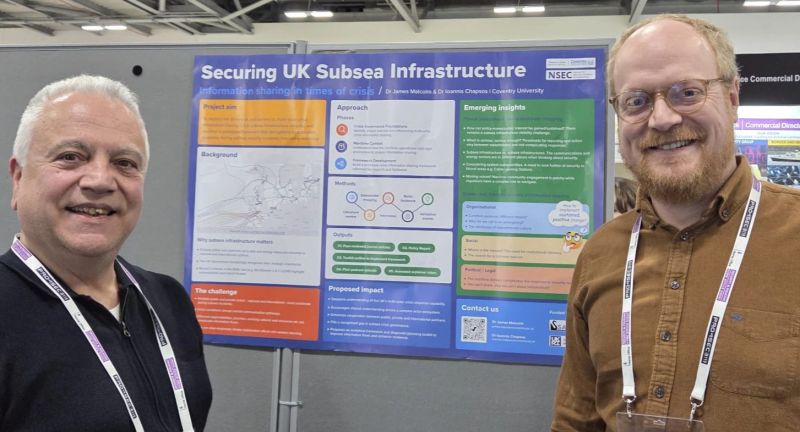
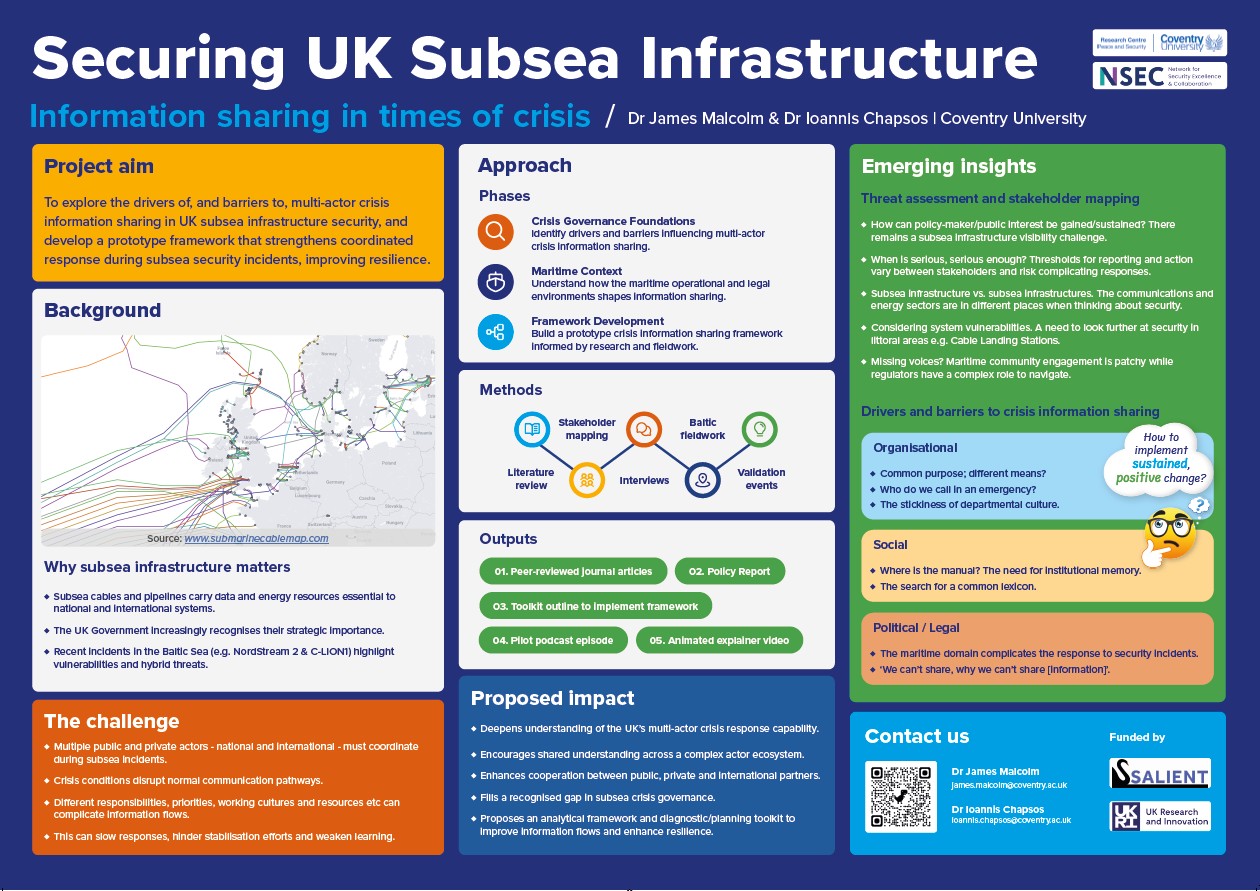
We were delighted to be invited by the Network for Security Excellence and Collaboration (NSEC) to introduce our Salient project at the UK Home Office Security and Policing conference. At the event in Farnborough we used a conference poster to introduce the key contours of our project and highlight some initial insights. This allowed us to begin conversations with a range of conference attendees and answer further questions on topics of mutual interest.
If you want to view the poster you can do so below by clicking on the link. Alternatively you can download it.
We are delighted to confirm that Dr Ioannis Chapsos has been appointed as the new Co-Investigator for the project.
An internationally recognised expert in Maritime Security, Dr Chapsos had a distinguished career in the Greek Navy before moving in to academic research. His research explores subjects including, transnational maritime organised crime; non-traditional maritime security challenges; human smuggling and trafficking by sea; and the privatisation of security. He is widely published, has led multiple externally funded research projects and has a strong track record of working with maritime security practitioners.
Speaking about the appointment, project PI, Dr James A. Malcolm, said:
“I am delighted to welcome Ioannis to the project team. Ioannis has a depth of knowledge and experience that will be invaluable as we continue our study into UK subsea infrastructure security. He brings seagoing experience alongside long established expertise in maritime security that will help deepen the project’s insights. We have worked together for many years and I know Ioannis will make a positive contribution to the work we are doing.”
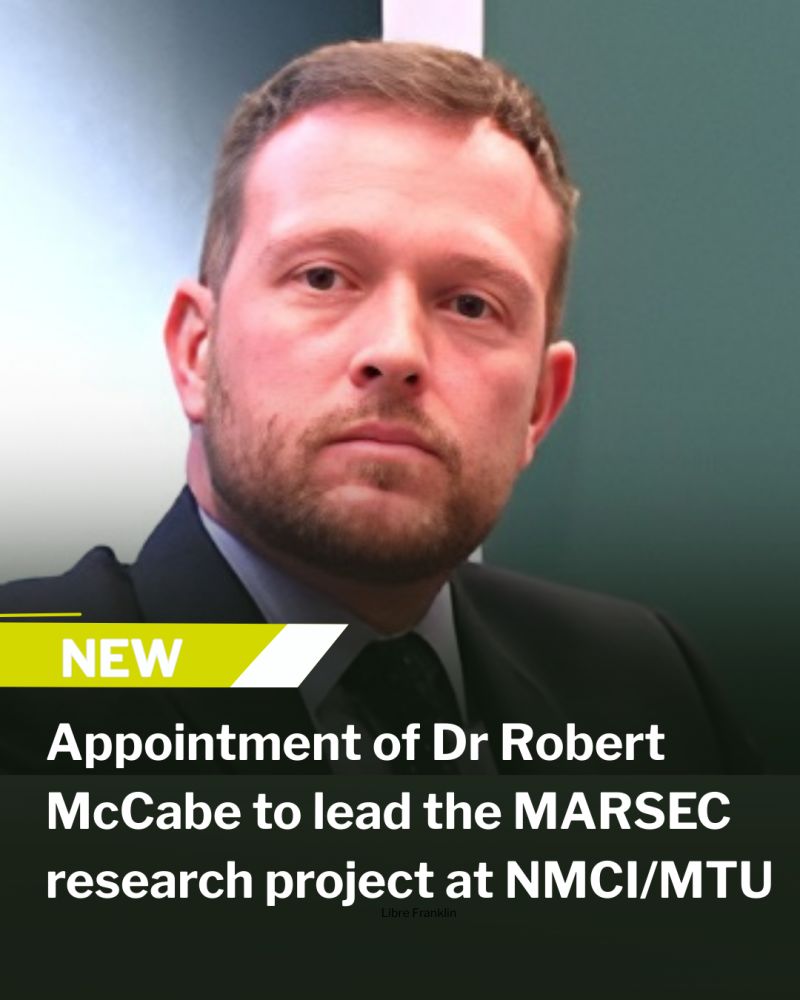
Our project co-investigator, Dr Robert McCabe, has joined the National Maritime College of Ireland. Appointed to lead a new MARSEC research project, Robert will be working with and across multiple departments in the Irish government.
While we are sad to bid Robert farewell from the project, we are delighted he has been appointed to this prestigious and high profile job. Below we copy the official LinkedIn announcement from the Department of Defence, Ireland.
The Departments of Defence and Climate, Energy & the Environment have allocated €470,000 to support this two-year pilot programme, aimed at enhancing maritime cyber resilience and assessing risks to critical underwater infrastructure. This project exemplifies the power of cross-departmental collaboration in addressing national security challenges.
This pilot research programme complements the work that the Department of Defence is undertaking on implementing the new National Maritime Security Strategy, which was launched recently.
Congratulations, Dr McCabe, on this significant appointment! We are looking forward to seeing the impact of your work on our maritime landscape.”
This website was created using Coventry.Domains, a service of the Coventry University Group. The information, views, opinions and discussion contained on this website are those of the author(s) and do not necessarily reflect the views and opinions of the Coventry University Group. For more information on privacy, cookies, takedown requests and more, visit our policies page.