Category: Engineering and Technology

The IoT Collaborative: Empowering Ideas Across Borders

Coventry University Wroclaw
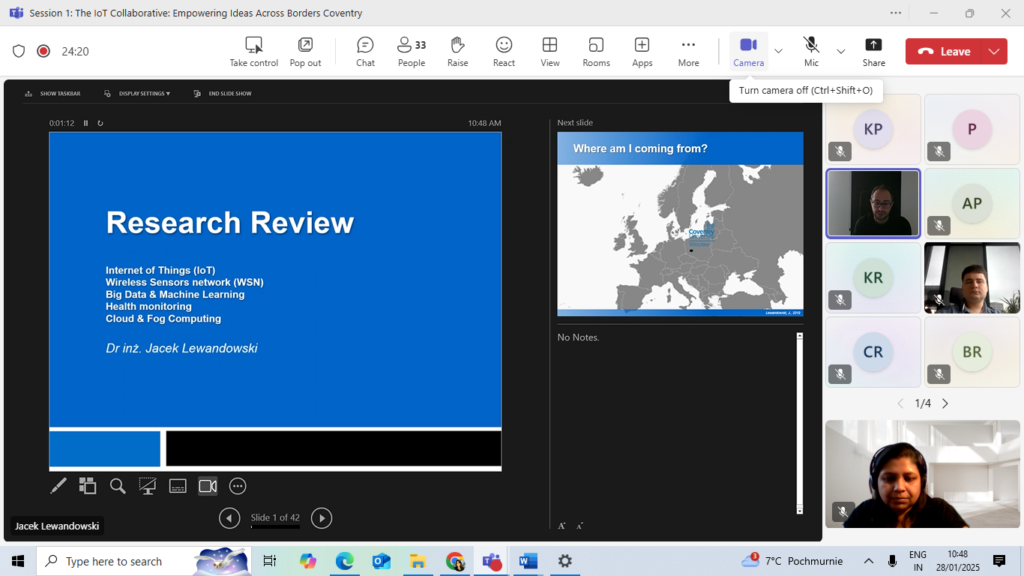
Image: Screenshot of 1st session

Academic Year: 2024-25

Project Leader: Mitali Halder, Assistant Lecturer, Coventry University Wroclaw, Poland

Project Co-Leaders: Dr Vishnu Srinivasa, Associate Professor & Dr Preethi Srivastha, Assistant Professor, Manipal Institute of Technology, Bengaluru, India

Partner University(s)/Organisation(s): Manipal Institute of Technology, Bengaluru, India

Project Overview:

This innovative project fosters international collaboration between Coventry University Wroclaw, Poland, and Manipal Institute of Technology, India, to explore cutting-edge applications in the Internet of Things (IoT). Through interactive sessions, students engage in brainstorming, group discussions, and project development across diverse domains, such as healthcare, environmental conservation, and smart infrastructure. Over three weeks, participants create a project plan and prototype, highlighting societal impact and technical feasibility. This initiative enhances intercultural communication, innovation, and problem-solving skills, culminating in a presentation session that recognizes top projects and fosters academic and professional growth in IoT.

Two outstanding final project presentations deserve special mention:

  1. Smart Parking System

Developed by: Yehor Boiko, Coventry University Wrocław, Poland

This intelligent parking solution leverages YOLOv11 for real-time object detection integrated with AWS cloud services to monitor parking availability dynamically. This project exemplifies the fusion of IoT and AI in creating scalable urban infrastructure solutions. A detailed project walk through and video have been shared via the dedicated Community AULA platform.

2. Fashionable Protective Device

Developed by: Debasish Tripathy & Chinmai R., Manipal Institute of Technology

This innovative wearable merges fashion with function by introducing a stylish, unobtrusive neck accessory equipped with advanced personal safety features. By incorporating dual cameras (Sony IMX219 and NoIR) for threat detection, an ESP32 microcontroller for edge processing, and multi-modal connectivity (Wi-Fi, Bluetooth 5.0, LTE, mesh networking), the device ensures secure, real-time data exchange. The system uses MQTT, CoAP, and TLS/SSL for encrypted communication and employs Google Vertex AI for intelligent threat analysis—delivering rapid, reliable protection with optimised power consumption for all-day wear.

Special Acknowledgments:

Coventry University Wroclaw, Poland:

  • Dr. Karolina Pokorska, Business Development Manager – A pillar of support throughout this journey, guiding the project lead through the entire collaboration process.
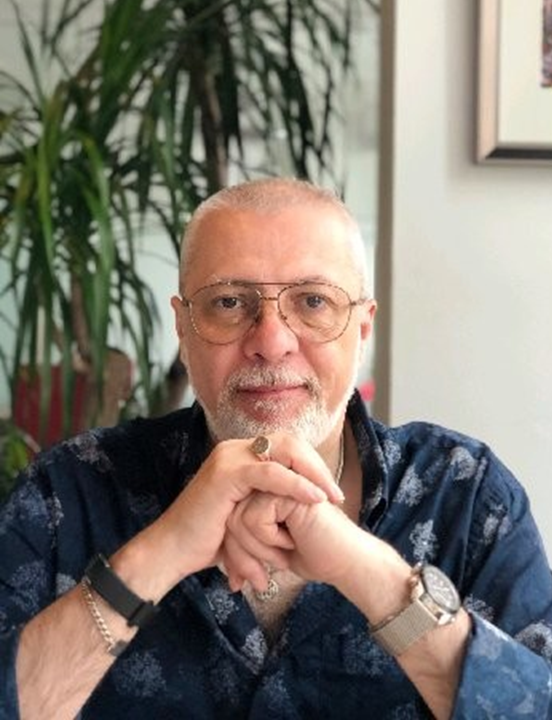
  • Dr. Jacek Lewandowski , Director & Assistant Professor – For fostering an environment of freedom and creativity, enabling modernization in academics. His contributions to the COIL project and his expertise in IoT played a crucial role in laying the foundation for project ideas and inspiring participants.

Manipal Institute of Technology, Bengaluru, India:

  • Dr. Anand Pal, Assistant Director, International Collaboration  – Facilitated communication and helped identify the right domain experts for the event.

Online Tools Used: Microsoft Teams

A Web-based Interactive Remote Laboratory for Distance Teaching and Learning

Faculty of Engineering, Environment and Computing

School of Mechanical, Aerospace and Automotive Engineering

Image: Project slide

Academic Year: 2016-17

Project Leader: Yuri Vershinin

Partner University(s)/Organisation(s): Institute of Control Sciences of Russian Academy of Sciences (Russia)

Project Overview:

This COIL project allows students to participate in practical laboratory sessions remotely via the Internet at anytime and anywhere in the world. Students can control a small education robot, electric motors, LEDs, microcontrollers and other equipment using their home computers, mobile-phones or other smart devices. This system is connected to the Moodle, thus students can submit results of their practical laboratory sessions to a lecturer via the Moodle. A lecturer can provide the feedback to students and can communicate with students via a built-in messenger.

This system can be very useful for universities which cannot afford to purchase expensive equipment (for example, for universities on the African continent, in Far-East countries, etc). Students in those universities can use the equipment (which is located in the Coventry University laboratory) via the Internet. The Remote Laboratory can be used for the On-line Teaching and Learning for part-time students in the UK and for the International Global Education. The remote-controlled laboratories well supplement traditional Moodle or Aula based education for the Collaborative Online International Learning (COIL) classes.

Online Tools Used: Email, Skype, Open Moodle/Aula

Remote controlled laboratories allow universities to enhance the intercultural engagement and internationalisation of the curriculum. The network of remote laboratories between universities in Germany, the UK, Russian Federation, Estonia and Finland was developed. This development led to a success of an international project VAPVoS (Virtual Academy Platform for Vocational Schools) which was financed by the European Union, (Leonardo-da-Vinci LLP Educational Project). This project includes 11 partner organizations from 9 countries.

This COIL project was shortlisted to the final three for the Coventry University “Staff Conference & Excellence Awards 2019” in the “Course Student Support Initiative of the Year” category.

Automotive Suspension System Analysis and Design

Faculty of Engineering, Environment and Computing

School of Mechanical, Aerospace and Automotive Engineering

Academic Year: 2017-18

Project Leader: Yuri Vershinin

Partner University(s)/Organisation(s): Centre for Research and Advanced Studies of the National Polytechnic Institute (Mexico)

Project Overview:

Increased competition on the automotive market has forced companies to research into alternative strategies to classical passive suspension systems. In order to improve handling and comfort performance, instead of a conventional static spring and damper system, semi-active and active systems are being developed. An active suspension system possesses the ability to reduce acceleration of sprung mass continuously as well as to minimize suspension deflection, which results in improvement of tire grip with the road surface, thus, brake, traction control and vehicle manoeuvrability can be considerably improved.

In this COIL project, students design mathematical models of a car suspension system and do the system performance analysis. Additionally, they design control algorithms for an automotive active suspension system.

This project enables students to develop practical skills in areas related to control engineering and software design.

Online Tools Used: Skype, Email

This project is the part of the EU International Project “DIONICOS” (Dynamics In and Off Complex Systems), which includes 19 partner organizations from 12 countries. Several joint technical papers have been presented on international conferences in Russian Federation and France and published in proceedings of the IEEE and IFAC (International Federation on Automatic Control).

https://cordis.europa.eu/project/rcn/110181_en.html

International Project Management

Faculty of Engineering, Environment and Computing

School of Mechanical, Aerospace and Automotive Engineering

Image: Project slide

Academic Year: 2020-21

Project Leaders: Karim Ahmed, David Fuschi

This image has an empty alt attribute; its file name is image-11.png
Image: Dr Karim Ahmed
Image: Dr David Fuschi

Partner University(s)/Organisation(s): Kalinga Institute of Industrial Technology (India)

Project Overview:

Our Engineering Project Management team has been successful in making the most of the COVID-19 restrictions through engaging with COIL partners across the world. We were lucky to collaborate with University of Dayton (USA) in a project where students acted as consultants for each other achieving a core objective for the Strategic International Project Management module. The intensity of planning and designing the module has all paid off due to the continuous support of our Associate Head of School International for Global Engagement and the Centre for Global Engagement team, who shared its insight and guidance at every turning point. We must have done something right as Dayton returned for another COIL project the subsequent semester, and students provided a lot of positive feedback in their personal reflections.

Sadly, Dayton did not run a similar Project Management module in January 2021, so we reached out through the team’s connections and were able to secure a COIL project with Kalinga Institute of Industrial Technology, KiiT (India) where our students developed an educational PM Game focusing on Sustainable Development Goals and utilising the KiiT students’ projects addressing access to education and sanitation (SDG goals) in rural India, ending with a (virtual) closing ceremony attended by ViPs from Faculty of Engineering, Environment and Computing at Coventry University.

All of the experiences were eye opening for our students who walked away with a better understanding of the concepts at hand, and a greater appreciation for different cultures. We are now embarking on our next COIL journey with both institutions simultaneously.

Online Tools Used: Email, Zoom

Machine Learning for the Local Community

Faculty of Engineering, Environment and Computing

School of Computing, Electronics and Maths

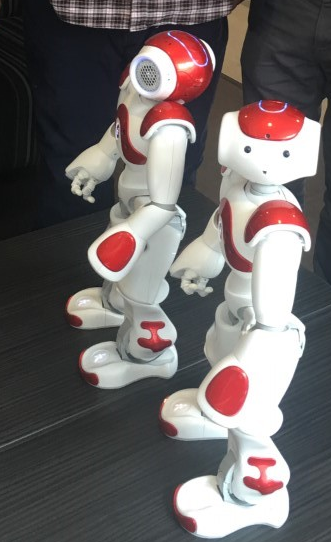
Image: Project robots

Academic Year: 2020-21

Project Leader: Mark Elshaw

Partner University(s)/Organisation(s): University of Aveiro (Portugal)

Project Overview:

In this project computing students from Coventry University​ and University of Aveiro​ worked together to identify and implement machine learning solutions that could benefit their local communities. Machine learning due to the availability of big data and greater computation power is at the start of a journey that could change all of our lives in way we can only dream of.  The students looked at different machine learning ideas including people recognition and disease recognition.  The results of the projects were presented at an event at the University of Aveiro.  This was the first years and so the numbers were small to gain knowledge on COIL project.  We plan to expand the project to include more students next year. 

Online Tools Used: Email, Skype, Open Moodle

This website was created using Coventry.Domains, a service of the Coventry University Group. The information, views, opinions and discussion contained on this website are those of the author(s) and do not necessarily reflect the views and opinions of the Coventry University Group. For more information on privacy, cookies, takedown requests and more, visit our policies page.