Author: Ubine M. Joseph (Page 1 of 3)

Global Health Care Manager and Leader

It’s 65!

Reading Time: 2 minutes

A story about a 65-year-old man called Hausa who married two wives named Yoruba and Igbo. But Hausa had a communication difficulty and couldn’t communicate efficiently with his two wives because they both spoke different languages, so he married a third wife named English. But English told Hausa: “At the moment, I can only marry you as a diplomat or a business partner; hopefully, in the future, we can naturally blend.”

And yes, they married. English was good at closing the gap of context in all their conversations until all three wives and Hausa could comfortably communicate with each other. Now they all can understand what each partner is saying.

They were all on good terms until, after a few years, the second wife, Igbo, insisted that she had been marginalized and that she wanted major roles in governance; otherwise, she would have to seek international protection against the negative charges. Hausa refused to accept, and then Igbo went on and decided to work on seceding from the relationship. And yes, she was recognized as fleeing persecution, war, or serious harm, and her reasons were associated with race, religion, nationality, political opinion, and membership in a particular social group or multiple social groups.

Although Hausa uses religion, hope, financial status, entertainment, gist, culture, and pride (fashion, traditions, etc.) to manage his affairs, he is looking forward to a fourth wife that can help him out of his pervasive corruption, governance, insecurity, social challenges, economy, and infrastructure problems, just as English had helped him with resolving communication problems in the past.

But now he doesn’t only have to deal with his fourth wife’s problems; now he also has to deal with his second wife’s affiliation to the United Nations’ 17 Sustainable Development Goals, brought up to him. In other words, Igbo is now giving him a chance to appeal; otherwise, she would start her life with a new man, or another man called Biafra!

Now guess the name of this man, who could he marry now, and suggest how his story is going to unfold in the next decades, millennium, or centuries ahead?


Story brought to you by Musa Ubine of Pison Peak Ltd
Pison Peak Ltd. Unveils AI-Powered Urban Planning App: A Glimpse into the Future of City Design

Reading Time: 2 minutes

Pison Peak Ltd. Unveils AI-Powered Urban Planning App: A Glimpse into the Future of City Design

Monday, September 1, 2025

Pison Peak Ltd. today announced a bold new project in development: an innovative, AI-powered

urban planning application designed to revolutionize how we envision and create urban spaces.

The company has released a conceptual blueprint for the tool, which aims to democratize the complex world of urban planning and make it accessible to a much wider audience.

Project Vision: Democratizing Design with AI

The core vision behind the new AI-Powered Urban Planning App is to create a next-generation tool that enables non-experts to rapidly prototype, analyze, and visualize urban development plans. By leveraging a simple, natural language interface, users will be able to describe their

ideas in plain English and have the AI translate them into a tangible, data-informed urban concept. This fluid, intuitive approach stands in stark contrast to traditional urban planning software, which often requires a steep learning curve and extensive technical knowledge.

The Architectural Blueprint

The app’s architecture is designed to be robust and highly integrated, comprising three main

components. The front end will feature a clean, minimal user interface with a single text input field and a dynamic 3D canvas for visualization, likely powered by a rendering library like Three.js. This is where users will interact with the AI and see their plans come to life.

Behind the scenes, the back end will act as a secure intermediary, managing API calls and

processing raw geospatial data from services like the Google Maps Platform into a structured format. An AI Integration component will be the brain of the operation, translating user text

prompts—such as “create a mixed-use development with apartments and retail space”—into actionable commands for the system.

Powerful Core Features for Rapid Prototyping

The application’s key features are designed to accelerate the conceptual and iterative design process. Users will benefit from:

● Natural Language Generation: The ability to simply describe a plan in text, eliminating the need for complex menus or manual input.

● Real-Time Data Overlays: Instant visualization of critical data such as population density, traffic congestion, or solar exposure directly on the 3D model.

● Iterative Design: Seamlessly modify plans with simple text commands, allowing for quick adjustments to building heights or the addition of new green spaces.

● Constraint Validation: The AI will be able to analyze proposed plans against real-world data and instantly flag potential violations of zoning laws or other regulations.

A New Paradigm in Urban Planning

Pison Peak’s new app is not designed to replace sophisticated, professional-grade software like ArcGIS CityEngine. Instead, it aims to fill a critical gap in the market by offering an unparalleled

tool for rapid prototyping and conceptual design. The ultimate efficiency gain lies in the speed of the entire design cycle—transforming a nascent idea into a visualized, data-informed concept in a fraction of the time.

This project represents Pison Peak Ltd.’s commitment to innovation and its vision of a future where technology empowers everyone to contribute to the creation of smarter, more efficient, and more beautiful cities.

Serotonin Transporter Gene (SLC6A4) and Depression Risk

Reading Time: 3 minutes

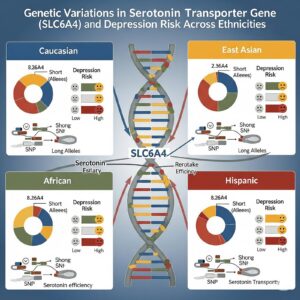
What are the chances of Genetic Variations in Serotonin Transporter Gene (SLC6A4) and Depression Risk Across Ethnicities: You will be amazed if you Examine how genetic variations in the serotonin transporter gene affect depression risk differently across various races and ethnic groups?


The relationship between genetic variations in the serotonin transporter gene (SLC6A4), particularly the 5-HTTLPR polymorphism, and the risk of depression is a complex area of research with findings that vary across different ethnic groups.

Here’s a breakdown of what the science says:

The 5-HTTLPR Polymorphism: The SLC6A4 gene has a region called the promoter, which acts like a switch to turn the gene on or off. Within this promoter is a polymorphism known as 5-HTTLPR, which commonly comes in two forms: a “short” (S) allele and a “long” (L) allele.
The short (S) allele is generally associated with lower transcriptional efficiency, meaning it produces less of the serotonin transporter protein. This can lead to higher levels of serotonin in the synapse, as there are fewer transporters to reabsorb it.

The long (L) allele is associated with higher transcriptional efficiency and more serotonin transporter protein.
Gene-Environment Interaction: A key finding is that the 5-HTTLPR polymorphism often interacts with stressful life events to influence depression risk. Individuals with the short allele may be more susceptible to developing depression following significant stress or trauma compared to those with two long alleles. However, without stressful life events, the genotype may not have a significant effect on depression probability.
Ethnic and Racial Differences: The frequency of the S and L alleles of 5-HTTLPR varies significantly across different populations. This variation can partly explain why the association between this polymorphism and depression is not consistent across all ethnic groups.

East Asian Populations: Studies have suggested a strong association between polymorphisms in SLC6A4 and a higher risk for major depression and suicidal tendencies in people of East Asian ancestry. It’s been proposed that the SLC6A4 gene has undergone strong positive selection in these populations.
European Populations: In individuals of European descent, the L allele of 5-HTTLPR has been associated with a better response to antidepressant medications, particularly selective serotonin reuptake inhibitors (SSRIs). Conversely, carriers of the short allele may experience more adverse drug reactions. The association between 5-HTTLPR and depression itself in European populations has yielded inconsistent results in some studies.
African Populations: There is a clear clustering of genetic variations in SLC6A4 that distinguishes African populations from others. More research is needed to fully understand the specific implications of these variations for depression risk in these groups.

Other Genetic Factors: It’s important to remember that depression is a complex, polygenic disorder. This means it is influenced by many genes, not just SLC6A4. Other polymorphisms and genes, as well as epigenetic factors like DNA methylation, also play a role in the development of depression.

In conclusion, while the serotonin transporter gene is a significant area of interest in depression research, its influence is not straightforward. The risk of developing depression is a result of a complex interplay between an individual’s genetic makeup, including variations in genes like SLC6A4, and their life experiences. The notable differences in the frequency of these genetic variations across ethnicities highlight the importance of considering ancestry in psychiatric genetics understanding.


Check the link for more on ResearchGate;

https://www.researchgate.net/publication/394431599_Genetic_Variations_in_Serotonin_Transporter_Gene_SLC6A4_and_Depression_Risk_Across_Ethnicities


Visa-Free Countries for Nigerian Passport Holders!

Reading Time: 3 minutes

As of February 2025, Nigerian passport holders have visa-free access to several countries across different continents. The number of visa-free destinations varies slightly depending on the source, ranging from 17 to 28 countries. This discrepancy may be due to differences in data collection dates or changes in visa policies.visaindex.com+1visaguide.world+1

Africa: Nigerian citizens can travel without a visa to several African countries, primarily within the Economic Community of West African States (ECOWAS). These countries include Benin, Burkina Faso, Cape Verde, Chad, Côte d’Ivoire, Ghana, Guinea, Guinea-Bissau, Liberia, Mali, Niger, Senegal, Sierra Leone, and Togo. The duration of stay varies by country, with many allowing stays up to 90 days.visaindex.com+2businessday.ng+2visaguide.world+2visaindex.com

Caribbean: In the Caribbean region, Nigerian passport holders can visit Barbados, Dominica, Haiti, and Saint Kitts and Nevis without a visa. For instance, Barbados allows a stay of up to 180 days, while Dominica permits up to 21 days.passportindex.org

Oceania: Countries such as Fiji, Micronesia, and Vanuatu in the Oceania region offer visa-free access to Nigerian citizens. Fiji allows a stay of up to 120 days, and Vanuatu permits up to 30 days.visaguide.worldpassportindex.org

It’s important to note that visa policies are subject to change. Therefore, it’s recommended to verify the current visa requirements of your destination country of interest before making travel arrangements.

Other continents, such as Europe, Asia, and the Americas, generally require Nigerian passport holders to obtain a visa before entry. However, a few exceptions exist where Nigerian citizens can obtain a visa on arrival or travel with an eVisa.

Why Are There Fewer Visa-Free Options Outside Africa?

  1. Bilateral Agreements – Many African nations allow Nigerians visa-free entry due to ECOWAS agreements, but similar arrangements do not widely exist with countries in Europe, Asia, or the Americas.
  2. Immigration Policies – Some countries have stricter visa requirements due to concerns about migration, security, or diplomatic relations.
  3. Passport Strength – The strength of a passport is determined by how many countries grant it visa-free access. Nigerian passport rankings fluctuate, which impacts visa policies in non-African regions.

Alternatives for Other Continents

Though outright visa-free entry is rare outside Africa and parts of the Caribbean, Nigerians can still travel to some countries with a visa-on-arrival or eVisa, such as:

  • Asia: Iran, Maldives, Timor-Leste
  • Americas: Bolivia
  • Middle East: Lebanon (visa on arrival under special conditions)


Full list of visa-on-arrival and eVisa countries for Nigerian passport holders!

Below is a categorized list of these countries:​

Visa on Arrival (VoA):

Electronic Visas (eVisas):

Please note that visa policies are subject to change. It’s advisable to consult the official immigration websites or consulates of your destination country for the most current information before making travel plans.​ Also consider internal and external factors that may be significant for your Global Health care reasons….

**Meet My Friends**

Reading Time: 4 minutes

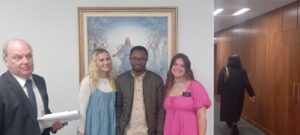
I have had the incredible privilege of meeting and being friends with some of the most dedicated and inspiring individuals in the missionary program of The Church of Jesus Christ of Latter-day Saints United Kingdom — From Sister Jesse Stock, Giulia Barcellos, Cardon, Wyatt, Wasden, Parente, Elder Garet,  Smith, Martin, Mitchell, and Shiremo etc. These remarkable people are missionaries from The Church of Jesus Christ of Latter-day Saints, serving in various locations as part of their commitment to spreading the gospel of Jesus Christ. Most of the tens of thousands of missionaries serving for the Church of Jesus Christ are young people under the age of 25, serving in 407 missions throughout the world.

Missionaries work with a companion of the same gender during their mission, with the exception of couples, who work with their spouse. Single men serve missions for two years and single women serve missions for 18 months.
Missionaries receive their assignment from Church headquarters and are sent only to countries where governments allow the Church to operate. Missionaries do not request their area of assignment and do not know beforehand whether they will be required to learn a language.

**The Missionary Effort: Following the New Testament Pattern**
The missionary program of The Church of Jesus Christ of Latter-day Saints follows the model established in the New Testament, where Christ’s disciples served in pairs, preaching the gospel and baptizing believers. Just as Paul and Barnabas travelled together, these modern-day missionaries serve two by two, providing support and companionship while they teach. Their mission is to bring people closer to Christ by sharing His teachings, offering service, and inviting others to be baptized in His name.

**The Qualities That Make Them Special**
Male missionaries are addressed with the title “Elder” and women are addressed with the title “Sister.” Each of these missionaries possesses unique and admirable qualities. Jesse Stock is filled with kindness and patience, always taking the time to listen and offer words of encouragement. Giulia Barcellos radiates warmth and sincerity, making everyone feel valued and heard. Cardon’s enthusiasm is contagious, inspiring those around her with her energy and commitment. Wyatt’s wisdom and understanding make’s her natural leader, while Wasden’s humour brings joy to every interaction. Parente’s compassion and selflessness shine through in everything she does. Gareth and Smith exemplifies diligence and a strong work ethic, never hesitating to lend a helping hand. Elder Martin is a pillar of faith, demonstrating unwavering devotion to his calling and he played a significant role in my baptism. Mitchell is thoughtful and empathetic, always ready to lift others up. Shiremo’s ability to care, show humility, resilience and sincerity make him a true disciple of Christ.

**A Day in the Life of a Missionary**
Life as a missionary is structured yet deeply fulfilling. Their days begin early at 6:30 a.m., usually with personal and companion scripture study, followed by prayer and planning for the day ahead. They spend their time reaching out to people—knocking on doors, engaging in community service, and teaching gospel lessons. Whether they are sharing scriptures with a family, helping someone move, or simply offering words of hope, their goal is always to bring others closer to Jesus Christ.
Evenings are often spent reflecting on the day’s experiences, writing in journals, and preparing for the next day. Missionaries end their day by 10:30 p.m. Despite the challenges they face—weathering rejection, adjusting to different cultures, and missing their families—their faith keeps them strong. They find joy in seeing others embrace the gospel and experience the love of Christ.

**Life After the Mission**
Missionaries serve for a set period—typically 18 months for women and two years for men—before returning home. But their missionary work does not end when they take off their name tags. These individuals carry the lessons they have learned into their future endeavours. Many continue to serve in their communities, strengthen their families, and pursue careers that allow them to make a difference in the world. Some become teachers, doctors, business professionals, or church leaders, all while continuing to share their testimonies in their daily lives.
Their missions shape them into lifelong disciples of Christ, instilling in them a deep sense of purpose, resilience, and a desire to serve others.

Meeting Jesse Stock, Giulia Barcellos, Cardon, Wyatt, Wasden, Parente, Gareth Smith, Elder Martin, Mitchell, Shiremo etc has been an incredible blessing to me. They have played significant roles in encouraging me on what it truly means to live a life of faith, service, and love. Their dedication to their mission and their unwavering belief in Christ’s gospel are truly inspiring. As they continue their journeys beyond their missions, I have no doubt that they will carry the light of Christ wherever they go, touching lives and making the world a better place.

Through their examples, I have seen the profound impact of selfless service and unwavering faith. I am grateful for their friendship and for the lessons they have taught me and lessons they have learned from me — lessons that we will cherish through our lifetime.

A Story by Joseph Ubine

Agnes’s Night Shift

Reading Time: 3 minutes

I used to fear working NHS night shifts would kill me | John Bryant | The  Guardian

The flickering fluorescent lights of Ward C cast long, distorted shadows across Mrs. Higgins’s room. Agnes, a Senior Healthcare Support Worker at North Bristol NHS Trust, adjusted the old woman’s blanket, a familiar pang of affection mixed with weariness. It was her tenth night shift in a row, and the ward was stretched thin. But Mrs. Higgins, with her sweet smile and stories of wartime Bristol, always made the extra effort worthwhile.

“Thank you, love,” Mrs. Higgins murmured, her voice frail. “You’re an angel.”

Agnes smiled. “Just doing my job, Mrs. Higgins.” She knew it was more than just a job. It was a calling, a connection to humanity in its most vulnerable moments.

Suddenly, a bloodcurdling scream echoed down the corridor. Agnes’s head snapped up, her senses on high alert. It was Nurse Davies, her voice tight with panic. “Agnes! Ward C! Emergency!”

Agnes rushed out, her heart pounding. She found Nurse Davies by Mr. Peterson’s room, her face ashen. “He’s… he’s gone. And the window’s open.”

Mr. Peterson, a dementia patient, was known for his restlessness, but he’d never wandered off the ward before. The open window, overlooking the hospital’s secluded garden, sent a chill down Agnes’s spine. It was a sheer drop, three stories down.

“Call security,” Nurse Davies said, her voice trembling. “And get Dr. Evans.”

Agnes didn’t wait. She knew every nook and cranny of the hospital, every hidden fire exit and service staircase. She grabbed a flashlight and slipped out the back door onto the fire escape, the cold night air a stark contrast to the stuffy ward.

The garden below was shrouded in darkness, the only light coming from the distant streetlamps. Agnes scanned the grounds, her flashlight beam dancing across the flowerbeds and manicured lawns. Then, she saw it. A flash of blue, disappearing behind the overgrown shrubbery near the old, disused greenhouse.

“Mr. Peterson!” Agnes called, her voice echoing across the silent garden. No response.

She cautiously made her way towards the greenhouse, the overgrown weeds snagging at her uniform. The air was thick with the smell of damp earth and decaying leaves. As she reached the greenhouse, she heard a faint whimpering.

She pushed open the creaking door and stepped inside. The air was heavy with humidity and the smell of mildew. Moonlight filtered through the broken panes of glass, casting eerie shadows across the rows of empty plant pots.

And there, huddled in a corner, was Mr. Peterson. He was shaking, his eyes wide with terror. But he wasn’t alone. A shadowy figure was leaning over him, holding something that glinted in the moonlight.

Agnes’s blood ran cold. It wasn’t just a confused patient; this was something else entirely. She recognized the figure – a man she’d seen lurking around the ward earlier that evening, asking strange questions about patient medications. A drug thief, she realized, preying on the vulnerable.

“Get away from him!” Agnes shouted, her voice surprisingly strong.

The man turned, his face contorted with anger. He lunged at Agnes, the glinting object in his hand now clearly visible – a syringe. Agnes instinctively ducked, the syringe whistling past her ear.

She knew she was no match for him physically, but she had to protect Mr. Peterson. She grabbed a nearby clay pot and hurled it at the man, hitting him squarely in the chest. He staggered back, giving Agnes a chance to grab Mr. Peterson and pull him behind her.

Just then, security guards arrived, alerted by Nurse Davies. They quickly apprehended the man, who was cursing and struggling.

Agnes slumped against the wall, her heart still racing. She was shaken, but she was okay. And, more importantly, Mr. Peterson was safe.

The next day, a local artist, inspired by Agnes’s bravery, presented the ward with a painting. It depicted the hospital garden bathed in moonlight, with a small figure in a blue uniform standing protectively in front of the greenhouse. It was a reminder, Agnes thought, that even in the darkest of nights, there are always those who will stand up for what’s right, those who will protect the vulnerable, those who see their work as more than just a job, but as a calling. And Agnes, the Senior Healthcare Support Worker, was one of them.

The biting Hertfordshire wind whipped at Sarah’s face

Reading Time: 3 minutes

The biting Hertfordshire wind whipped at Sarah’s face as she trudged down the dimly lit alleyway. Her phone’s flashlight beam danced nervously, illuminating graffiti-covered walls and overflowing bins. This wasn’t her usual Tuesday. She was a Community Outreach Support Worker with the Hertfordshire Partnership NHS Foundation Trust, and her usual Tuesdays involved home visits, connecting vulnerable individuals with mental health services, and gentle encouragement. Tonight, however, was different. Tonight, she was following a lead.

Earlier that day, a frantic call had come in from a local soup kitchen. A young man, known only as ‘Sparks’, had been ranting about voices and claiming someone was trying to hurt him. He’d vanished before staff could get him proper help, muttering about “the mural” and “they’ll see.” The soup kitchen volunteers knew Sarah – her reputation for quiet persistence preceded her – and begged her to try and find him.

The “mural” turned out to be a large, community-painted artwork tucked away in this neglected corner of Hemel Hempstead. Sarah had seen it before; a vibrant explosion of colours depicting interconnectedness and global health. It was a project supported by a Global Healthcare Management initiative, a fact that seemed strangely at odds with the grime and desperation surrounding it.

As she reached the mural, a figure emerged from the shadows. It was Sparks, hunched and agitated, his eyes wide with fear. He clutched a can of spray paint. “They’re watching me,” he whispered, his voice trembling. “They know I know.”

Suddenly, a car engine roared to life at the end of the alley. Headlights cut through the darkness, revealing two men in dark jackets. They weren’t the police. Sarah felt a prickle of fear. This wasn’t just a mental health crisis; something else was going on.

“Sparks, we need to go,” Sarah said, keeping her voice calm. She knew she couldn’t outrun them, but she could try to de-escalate. She stepped between Sparks and the approaching car. “These men are here to help you,” she lied, hoping to buy some time.

One of the men sneered. “Get out of the way, social worker. This doesn’t concern you.”

Sarah stood her ground. “It concerns anyone who cares about this community. What do you want with him?”

The men exchanged a look. “He saw something he shouldn’t have,” one of them growled. “Something about… the shipment.”

“Shipment?” Sarah’s mind raced. The mural… Global Healthcare Management… Could there be a connection?

Sparks, seeing his chance, darted behind Sarah and pointed at a section of the mural. “It’s there! Hidden! They’re smuggling something!”

Before Sarah could react, one of the men lunged forward, trying to grab Sparks. Sarah shoved him back, her adrenaline surging. She wasn’t trained for this, but she wouldn’t let them take him.

Just then, sirens wailed in the distance. The men hesitated, then jumped back into their car and sped away.

Sarah breathed a sigh of relief. The police would be here soon. She turned to Sparks, who was shaking uncontrollably. “It’s okay now,” she said gently. “You’re safe.”

As the police investigated, Sarah sat with Sparks, listening to his fragmented story. He’d seen the men hiding something behind the mural, something that looked like medical supplies, but he suspected it wasn’t legitimate.

The next day, the police uncovered a hidden compartment behind the mural containing illegal pharmaceuticals. The connection to Global Healthcare Management was still being investigated, but it was clear that something was deeply wrong.

Sarah’s Tuesday had taken a dangerous turn, but it had also highlighted the importance of her work. She wasn’t just a support worker; she was a vital link in the community, a protector of the vulnerable, and sometimes, even a shield against the darkness. As she looked at the vibrant mural, now a symbol of something more sinister, she knew her work was far from over. The fight for the well-being of her community, both physical and mental, had just begun.

Pison Peak Ltd classifications mentioned

Reading Time: 2 minutes

Walking along the classifications mentioned in our SIC: Pison Peak Ltd is positioned in building Capacity around;

1. Development of building projects:

– “We (Pison Peak Ltd) focus on sustainable, eco-friendly building practices to stand out in the competitive market of building development projects. Research shows that more and more consumers prioritize sustainability when making purchasing decisions. By investing in green building practices, Pison Peak Ltd can attract more environmentally-conscious customers and increase their market share.”
– “To expand our reach in the market of building development projects, we recommend and plan on Pison Peak Ltd’s investments in smart-home technology and follows the trend of affordable housing. These areas have shown significant growth in recent years, and Pison Peak Ltd can leverage their expertise to take advantage of new opportunities.”

2. Management consultancy activities (other than financial management):

– “To succeed in the field of management consultancy activities, we in Pison Peak Ltd stays up-to-date on the latest industry trends and best practices. We can achieve this by attending conferences, workshops, and networking events for management consultants.”
– “Pison Peak Ltd can expand her service offerings and reach by building partnerships or strategic alliances with other consulting firms. By collaborating with other firms, Pison Peak Ltd can offer more specialized services and tap into new customer segments.”

3. Research and experimental development on biotechnology:

– “As a specialized field, we in Pison Peak Ltd will be investing in hiring talented researchers who have the technical skills and expertise to deliver high-quality results. We can achieve this by developing relationships with universities and research institutions to find highly skilled individuals.”
– “To keep up with the latest advances in biotechnology, we will attend conferences and workshops specific to this field. This will help us stay up-to-date on the latest advances and incorporate that knowledge into our research.”

4. Specialist medical practice activities:

– “To stand out in the field of medical specialization, we recommend that Pison Peak Ltd focus on building a strong reputation for high-quality, patient-centered care. We can achieve this by hiring skilled medical practitioners and investing in the latest medical technology and equipment.”
– “Pison Peak Ltd will consider developing more partnerships in specialized expertise in market valued areas of medicine, such as pediatric care or geriatric care etc. By becoming recognized leaders in this particular field, more patients and increase in market shares will be possible.”

However, diversification of our business class portfolio allows us to introduce new products accordingly and expand our product and service portfolio to attract more customers.

Hunter Hayes – Tell Me (Lyrics)

Reading Time: 2 minutes

“Tell Me”

Big dreams even time couldn’t change
No fear just a heart full of brave
You don’t feel you belong in this place
And you’re asking, yeah you’re askingHow to pack, how to find your own freedom
How to find all the things that you’re needing
I’ll be one of the things that you leave
And I feel it, I can see it

And you know if I’m lying
So I won’t even try
I don’t mean to be quiet
But I know you need to fly

Tell me what to do about it
Tell me how to say goodbye
How am I supposed to live without you
Don’t wanna lose my world tonight
Tell me this will make you happy
What am I supposed to say
Tell me what to do about it
Does it have to end this way

Make a joke, make it seem like it’s nothing
Write a note so that I can keep something
I’m a mess and you know I’m not good at pretending
Oh no

So we smile while we’re crying
Holding oceans back inside
And I try to be quiet
As I watch our dreams collide

Tell me what to do about it
Tell me how to say goodbye
How am I supposed to live without you
Don’t wanna lose my world tonight
Tell me this will make you happy
What am I supposed to say
Tell me what to do about it
Does it have to end this way

And you know if I’m lying
So I won’t even try
I don’t mean to be quiet
But I know you need to fly

So tell me what to do about it
Tell me how to say goodbye
How am I supposed to live without you
Don’t wanna lose my world tonight
Tell me this will make you happy
What am I supposed to say
Tell me what to do about it
Does it have to end this way

Tell me what to do about it
Does it have to end this way

https://youtu.be/tc7zCdeQgJU
« Older posts

© 2026 PisonPeak

Theme by Anders NorénUp ↑

This website was created using Coventry.Domains, a service of the Coventry University Group. The information, views, opinions and discussion contained on this website are those of the author(s) and do not necessarily reflect the views and opinions of the Coventry University Group. For more information on privacy, cookies, takedown requests and more, visit our policies page.