Unless the person using the work received separate permission or relied on fair dealing or other exceptions to copyright, they are potentially liable for copyright infringement.
If someone uses a CC-licensed work without following the licence, their right to use the work ends automatically as soon as they violate its terms.
Under CC version 4.0, users of CC-licensed works who come into compliance with licence terms within 30 days of discovering they were in violation of the terms have their rights under the licence automatically reinstated.
Sometimes, these types of disputes can end up in court. Judicial decisions have been made in various places worldwide, and no courts have ever questioned the validity of the CC licence.
The author takes no responsibility for the content of this page, which is not intended as binding legal advice. The views are about copyright in the UK Higher Education sector context.
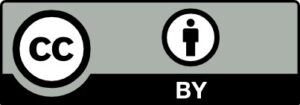
Attribution lets others distribute, remix, tweak and build upon the work, even commercially, as long as it is credited to the original owner.
BY – Credit must be given to the creator
CC BY NC
Attribution-NonCommercial lets others remix, tweak, and build upon the work non-commercially. Although the new works must acknowledge the original owner and be non-commercial, they don’t have to license their derivative works on the same terms.
BY – Credit must be given to the creator NC – Only noncommercial uses of the work are permitted
BY SA
Attribution-ShareAlike lets others remix, tweak, and build upon the work, even for commercial purposes, as long as the original copyright owner is credited and the new creation is licensed under identical terms. All new works will carry the same licence so that any derivatives will allow commercial use.
BY – Credit must be given to the creator SA – Adaptations must be shared under the same terms
BY ND
Attribution-NoDerivs allows for commercial and non-commercial redistribution as long as it is passed along unchanged and in whole, with credit to the original copyright owner.
BY – Credit must be given to the creator ND – No derivatives or adaptations of the work are permitted
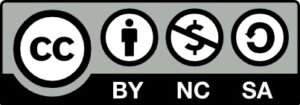
BY NC SA
Attribution-NonCommercial-ShareAlike lets others remix, tweak, and build upon the work non-commercially, as long as the original owner is credited and the licence of the new creation is under identical terms.
BY – Credit must be given to the creator NC – Only non-commercial uses of the work are permitted SA – Adaptations must be shared under the same terms
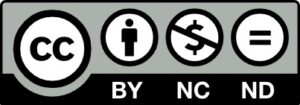
CC BY NC ND
Attribution-NonCommercial-NoDerivs is the most restrictive of the six licences, allowing others to download and share work, as long as they credit it to the original copyright owner; however, works cannot be changed in any way or used commercially.
BY – Credit must be given to the creator NC – Only non-commercial uses of the work are permitted No derivatives or adaptations of the work are permitted
In addition, CC also has two public domain tools, though they are not licences.
The author takes no responsibility for the content of this page, which is not intended as binding legal advice. The views are about copyright in the UK Higher Education sector context.
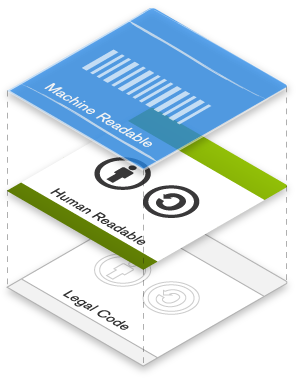
The licences are built using a three-layer design:
The legal code is the “lawyer-readable” terms and conditions legally enforceable in court.
The commons deeds summarize the legal code and consist of web pages that lay out the key licence terms in “human-readable” format.
The machine-readable version makes it easy for websites and web services to know when a work is available under a CC licence – a recognition that software plays a critical role in creating, copying, discovering, and distributing works.
The author takes no responsibility for the content of this page, which is not intended as binding legal advice. The views are about copyright in the UK Higher Education sector context.
The following icons represent the four licence elements:
Attribution or “BY” indicates that the original creator needs to be acknowledged. All of the CC licences include this condition.
ShareAlike or “SA” indicates that adaptations based on this work must be licensed under the same licence. Two of the CC licences include this condition.
NonCommercial or “NC” means that the work is only available to be used for non-commercial purposes. Three of the CC licences include this restriction.
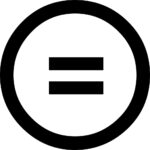
NoDerivatives or “ND” indicates that re-users cannot share work adaptations. Two of the CC licences include this restriction.
The author takes no responsibility for the content of this page, which is not intended as binding legal advice. The views are about copyright in the UK Higher Education sector context.
Creative Commons (CC) licences are one of the public copyright licences that enable the free distribution of an otherwise copyrighted creation.
A CC licence is used when an author or copyright owner wants to give other people the right to share, use and build upon a work the author has created.
CC licences are built on copyright and are designed to give more options to creators who want to share.
Why do we need CC licences?
The CC licences were created in response to an outdated global copyright legal system and to help address the tension between creators’ ability to share digital works globally and copyright regulation.
What is the CC licence scope?
CC licences are appropriate for creators to provide people with permissions governed by copyright from the onset.
They have the basic limitation of controlling what people do with the work the licences; hence, they apply only when the work is within the scope of copyright, which means that they do not apply when copyright doesn’t and when exceptions to copyright law do.
They warrant that there may be other not covered rights at play with the work that restrict how it is used (i.e., patents, trademarks, privacy and publicity rights) that must be managed separately.
Scenarios in which copyright does not apply and CC licences do not either:
Letting someone specifically read your article or watch your video is not regulated by copyright law.
When fair use, fair dealing or other limitation and exception to copyright applies.
The author takes no responsibility for the content of this page, which is not intended as binding legal advice. The views are about copyright in the UK Higher Education sector context.
Copyright is a legal right that grants the creator of original work exclusive rights for its use and distribution. It automatically grants all rights reserved to creators (no one else can copy, distribute, perform, adapt or otherwise use the work in violation of those exclusive rights).
Unlike other forms of IP, such as patents and trademarks, copyright protection exists automatically from the moment material is created. It does not have to be explicitly declared to be in effect.
Copyright law needs to strike a delicate balance between protecting creative works and allowing the public to use them:
Protection: a set of exclusive rights granted to authors to allow them to earn from their work and so incentivize them to produce new work
Dissemination: limits to the scope of exclusive rights to enable the spread of knowledge and dissemination of the works created through the copyright incentive
Creative Commons licences operate within copyright law, but they utilise a some rights reservedapproach.
They grant the public permission to use the works under certain standardised conditions for as long as the underlying copyright lasts or until one violates the licence terms.
The licences were designed to be a free, voluntary solution for creators who want to grant the public up-front permissions to use their works.
The author takes no responsibility for the content of this page, which is not intended as binding legal advice. The views are about copyright in the UK Higher Education sector context.
Images – including photographs, diagrams and other illustrations – available in print or from electronic sources are subject to copyright. It is essential to provide complete acknowledgements or attributions to the source.
For teaching purposes, using them under the criticism or review or the illustration for instruction exceptions may be permissible. Still, they must be given full acknowledgement or attribution, and care must be taken to ensure they are not further distributed.
Many sources of free images available on the Internet provide them with permission for use in certain circumstances, including teaching and private study, e.g., Creative Commons licensed images. You should always check the terms and conditions to ensure your use is legal and fully acknowledge your source.
Images freely available on the internet may still be protected by copyright, and you need permission from the rights-holder before copying them. Not all material marked as free to use on the Internet is meant to be distributed freely: material might be incorrectly annotated like, for example, some posted on Flickr and Wikimedia (for more details, see the related post following the link) – the latter complies with US law and marks some content as Public domain, but it is not considered to be so in our jurisdiction.
Images in sources covered by the CLA Licence may be scanned and distributed to students. They may also be included in presentations. Report any teaching material that includes scanned images to the digitisation service through the Subject Librarian.
The author takes no responsibility for the content of this page, which is not intended as binding legal advice. The views are about copyright in the UK Higher Education sector context.
Manage Cookie Consent
We use cookies to optimise our website and our service.
Functional
Always active
The technical storage or access is strictly necessary for the legitimate purpose of enabling the use of a specific service explicitly requested by the subscriber or user, or for the sole purpose of carrying out the transmission of a communication over an electronic communications network.
Preferences
The technical storage or access is necessary for the legitimate purpose of storing preferences that are not requested by the subscriber or user.
Statistics
The technical storage or access that is used exclusively for statistical purposes.The technical storage or access that is used exclusively for anonymous statistical purposes. Without a subpoena, voluntary compliance on the part of your Internet Service Provider, or additional records from a third party, information stored or retrieved for this purpose alone cannot usually be used to identify you.
Marketing
The technical storage or access is required to create user profiles to send advertising, or to track the user on a website or across several websites for similar marketing purposes.
This website was created using Coventry.Domains, a service of the Coventry University Group. The information, views, opinions and discussion contained on this website are those of the author(s) and do not necessarily reflect the views and opinions of the Coventry University Group. For more information on privacy, cookies, takedown requests and more, visit our policies page.
 BY – Credit must be given to the creator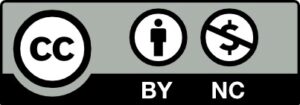
 NC – Only noncommercial uses of the work are permitted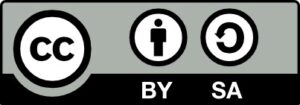
 SA – Adaptations must be shared under the same terms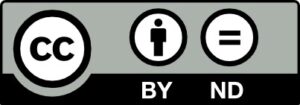
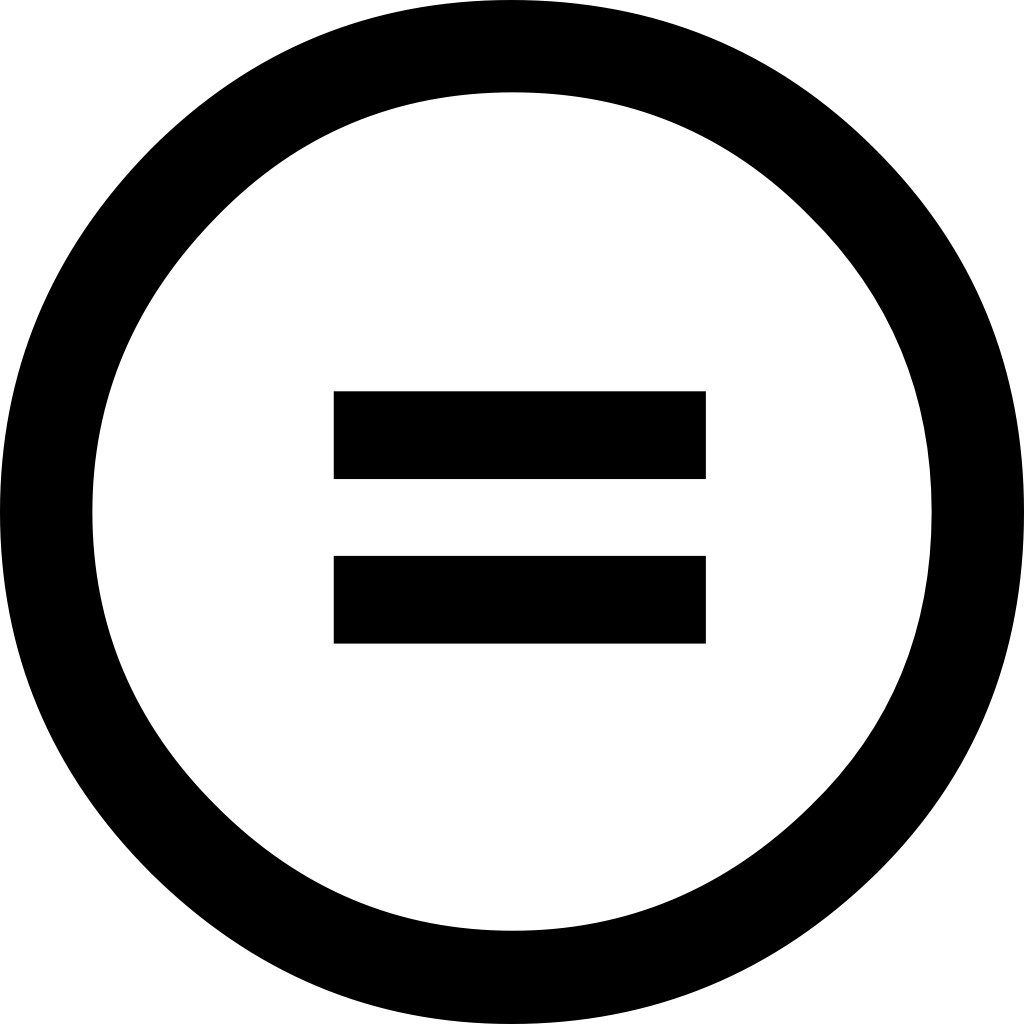 ND – No derivatives or adaptations of the work are permitted