Tag: History

The Berne Convention for the Protection of Literary and Artistic Works

There is no overarching international law, and copyright is governed by the laws of the land where the material is used. Still, some complications may arise from some discrepancies across borders. For this purpose, in 1886, some countries signed the Berne Convention for the Protection of Literary and Artistic Works. Member states must rectify their national laws by the principle set in by the Convention and agree to the following:

  • Give foreign works the same protection as the works originating in their own country.
  • Give automatic protection without requiring any formalities such as a deposit to national libraries or notifications
  • Protection is independent of the existence of protection in the country of origin of the work
  • Some minimum standards of protection relate to the works and rights to be protected and to the duration of protection (at least up to the 50th year after the author’s death)

The Berne Convention includes some exceptions on quotation and teaching. Article 10 allows the following specific free uses of works:

  1. Quotations: it is permissible to make quotations from a work which has already been lawfully made available to the public, provided that their making is compatible with fair practice and their extent does not exceed that justified by the purpose, including quotations from newspaper articles and periodicals in the form of press summaries.
  2. Illustration for teaching: it mandates member countries to legislate defining their terms, provided such utilization is compatible with fair practice.

In September 2021, there were 177 member states (out of the 193 countries recognised by the UN).


Go to next (still to come)

Go to previous The Statute of Anne

Go Home

The author takes no responsibility for the content of this page, which is not intended as binding legal advice. The views are about copyright in the UK Higher Education sector context.
The Statute of Anne

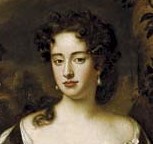
Anne Queen of England, Scotland and Ireland (1702 to 1714)

In 1710, Parliament passed the Statute of Anne, the first statutory copyright law. It gave the exclusive right to copy the manuscript of a book for 14 years. It was given to the author and the author’s chosen printer. So it was an author’s right, in that the author got to choose whoever they wanted to publish their book, but it did not get into effect until the book was published. So de facto it was a monopoly right for the publisher.

If still alive at the end of those 14 years, the author could get a renewal for another 14 years. If the author had died, the copyright lapsed, and it always lapsed after 28 years.

Copyright was obtained through registration with the stationer’s company and deposit of the published book in the Bodleian Library. If a book hadn’t been published, if it was just an unpublished manuscript, it did not get copyright protection.

So what was happening after 28 years? The House of Lords decided that the 28-year statutory term allowed by the Statute of Ann was all the rights. Once it had expired, the books went into the public domain. Neither the author nor the publisher retained any rights over their books after the term of copyright had expired.

The House of Lords essentially created the public domain, the idea that there would be creative works, works of literature and knowledge not owned by anyone after some period.


Go to next The Berne Convention for the Protection of Literary and Artistic Works

Go to previous Letter Patents

Go Home

Image: Public domain

The author takes no responsibility for the content of this page, which is not intended as binding legal advice. The views are about copyright in the UK Higher Education sector context.
2. History of copyright

To understand copyright, it is worth looking at how it developed through history:

  1. The invention of the printing press
  2. Letter Patents
  3. The Royal Company of Stationers
  4. The Statute of Anne
  5. The Berne Convention for the Protection of Literary and Artistic Works

(…to continue)


Go Home

The author takes no responsibility for the content of this page, which is not intended as binding legal advice. The views are about copyright in the UK Higher Education sector context.
The Royal Company of Stationers

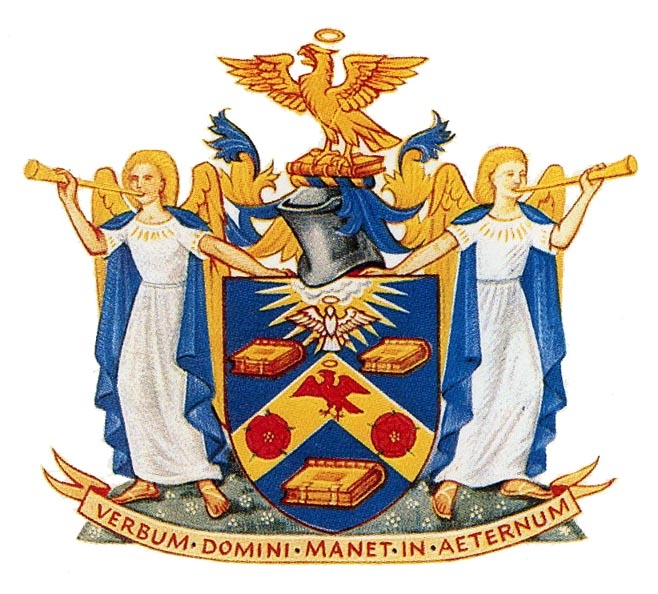
The Royal Company of Stationers’ Crest

In 1557, Queen Mary chartered The Royal Company of Stationers. Members were people who originally only sold paper, but under the licensing act of 1662, a printer had to be a member of the guild of ‘The Royal Company of Stationers’ to print books in England. If anybody else tried to print books, the Stationers were authorized to seize and burn them. It was an even more robust control over publishing, though the guild was allowed to give exclusivity even to printers who did not have a separate royal patent.

Interestingly, the Stationers agreed to the requirement to deposit a copy of every newly printed book in the Oxford University library. This agreement was signed with Thomas Bodley in 1610, who was the Oxford librarian at the time, and the Library of Oxford still carries his name, the Bodleian Library.

The Royal Company of Stationers lapsed in 1695 with the lessening of the desire for hard censorship. Since other people were suddenly allowed to print books, the Stationers faced competition, so they began to lobby Parliament for a permanent renewal of this charter that would make them the sole publishers in England.

Their early efforts to get this charter failed until they changed their tactics: they began to stress that the benefits of restricting printing were to give rights to authors as unique and individual geniuses who created these works.

The Parliament was sympathetic to the needs of authors rather than to the needs of a particular guild that just wanted a monopoly business, so it was decided to ensure the benefits to authors, even though it is very often deployed by enterprises that are simply looking to avoid unwanted competition, as we still often see it today: we know the publishing industry, the recording industry, and the movie industry often making appeals to the well-being of creators when what’s happening is that trade regulations are being enacted.


Go to next The Statute of Anne

Go to previous Letter Patents

Go Home

The author takes no responsibility for the content of this page, which is not intended as binding legal advice. The views are about copyright in the UK Higher Education sector context.

Letter Patents

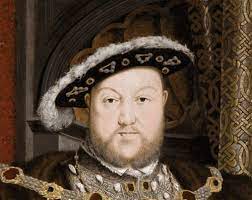
Henry VIII, King of England (1509-1547)

King Henry VIII of England released that the power of printing was very great for stirring up trouble and that he needed to be in control of what was printed and read. In the early 16th Century, he began to issue Letters Patents to authorise only certain people to purchase a copy of books from authors (this is why we call it copyright) and publish them exclusively.

Letters Patents are not to be confused with the modern meaning of ‘patent’, which is a protection for your invention that gives you the right to take legal action against anyone who makes, uses, sells or imports it without your permission.

Apart from giving privileges to specific printers, thus retaining control of what was being made available for people to read, Letters Patents prevented competition in the very early printing industry and introduced the concept of an exclusive right that would grant specific printers the privilege to print a particular book or often categories of books, such as prayer books or school textbooks.


Go to next The Royal Company of Stationers

Go to previous The invention of the printing press

Go Home

Image: Public Domain

The author takes no responsibility for the content of this page, which is not intended as binding legal advice. The views are about copyright in the UK Higher Education sector context.

The invention of the printing press

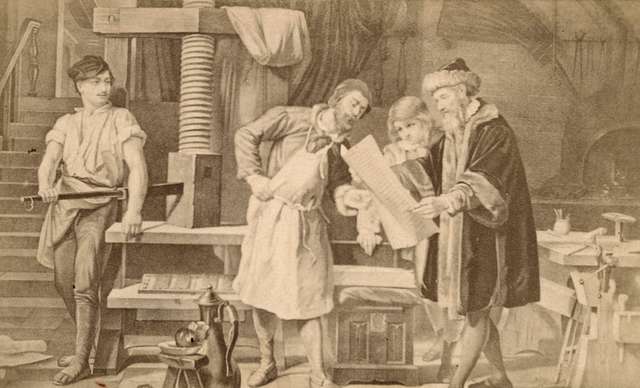
In the mid-15th Century, the German goldsmith Johannes Gutenberg invented the printing press. This was a new technology, and it marked the beginning of a new era: a single machine could produce almost 100 times faster any page that had been previously printed or copied by a solely dedicated person.

The printing press unlocked knowledge from being exclusively in the hands of a wealthy elite and the Church to be more widely available and affordable.


Go to next Letter Patents

Go Home

Image: Public Domain

The author takes no responsibility for the content of this page, which is not intended as binding legal advice. The views are about copyright in the UK Higher Education sector context.

This website was created using Coventry.Domains, a service of the Coventry University Group. The information, views, opinions and discussion contained on this website are those of the author(s) and do not necessarily reflect the views and opinions of the Coventry University Group. For more information on privacy, cookies, takedown requests and more, visit our policies page.