Tag: Public domain

The Statute of Anne

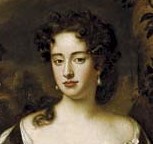
Anne Queen of England, Scotland and Ireland (1702 to 1714)

In 1710, Parliament passed the Statute of Anne, the first statutory copyright law. It gave the exclusive right to copy the manuscript of a book for 14 years. It was given to the author and the author’s chosen printer. So it was an author’s right, in that the author got to choose whoever they wanted to publish their book, but it did not get into effect until the book was published. So de facto it was a monopoly right for the publisher.

If still alive at the end of those 14 years, the author could get a renewal for another 14 years. If the author had died, the copyright lapsed, and it always lapsed after 28 years.

Copyright was obtained through registration with the stationer’s company and deposit of the published book in the Bodleian Library. If a book hadn’t been published, if it was just an unpublished manuscript, it did not get copyright protection.

So what was happening after 28 years? The House of Lords decided that the 28-year statutory term allowed by the Statute of Ann was all the rights. Once it had expired, the books went into the public domain. Neither the author nor the publisher retained any rights over their books after the term of copyright had expired.

The House of Lords essentially created the public domain, the idea that there would be creative works, works of literature and knowledge not owned by anyone after some period.


Go to next The Berne Convention for the Protection of Literary and Artistic Works

Go to previous Letter Patents

Go Home

Image: Public domain

The author takes no responsibility for the content of this page, which is not intended as binding legal advice. The views are about copyright in the UK Higher Education sector context.
3. Licences

Licences allow copyright owners to permit others to use the owned work. They can be exclusive, non-exclusive and open.

Licences should not be confused with the assignment of rights, where the copyright ownership is transferred from one entity to another.

The reuse of material has to fall within the terms allowed by the licence chosen by the copyright holder, apart from the following scenarios:

  1. As a user, you can justify the application of one of the copyright exceptions or
  2. The material is in the public domain and, hence, not subject to any licences.

Licenced material may be purchased through paid agreements (for example, through an institutional licence or contracts) or accessed for free if released to the public with an open licence or following an ad hoc permission granted by the copyright holder.

Look at the following categories to know more:

Can I use third-party-owned resources for teaching?
You might breach copyright law if you upload third-party-owned resources …
Which licences does the Coventry University Group manage centrally?
Downloaded and scanned materials such as book chapters and journal …

What are open licences?
A free or open licence is a licensing
agreement that allows individuals…

Back Home

The author takes no responsibility for the content of this page, which is not intended as binding legal advice. The views are about copyright in the UK Higher Education sector context.
What are open licences?

A free or open licence is a licensing agreement that allows individuals to reuse another creator’s work. This use is granted by the copyright owner at the start.

Some of the most common licences are as follows:

Please note that works in the public domain are free to be used, but licences do not regulate them.


Back to Licences

Back Home

The author takes no responsibility for the content of this page, which is not intended as binding legal advice. The views are about copyright in the UK Higher Education sector context.
How can I use works on Wikimedia and Wikipedia?

Wikimedia and Wikipedia’s material minimum standard licence is the Creative Commons By Attribution ShareAlike.

You will be able to find material labelled with the Creative Commons By Attribution and the public domain.

Please note that Wikimedia and Wikipedia’s material are distributed under the US copyright law. Use care in selecting items licensed in the public domain are not necessarily so in the UK or other countries. It is advisable to follow the link to the original source and seek released and licence information from it rather than rely on what is displayed on Wikipedia/Wikimedia.

Assuming that the work is correctly licensed from Wikimedia, you may click on the world icon to discover the following:

  • Page URL
  • File URL
  • Preferred attribution
  • Scripts to embed both attribution and file

Back to How do I pick a Creative Commons licence for my work?

Back to Creative Commons licences

Back to Open licences

Back Home

The author takes no responsibility for the content of this page, which is not intended as binding legal advice. The views are about copyright in the UK Higher Education sector context.
4. What is the public domain?

The Public Domain (PD) consists of creative works not subject to copyright to which no exclusive intellectual property rights apply (no licence can apply, not even the Creative Commons licences).

Such creative works are publicly available, and new creativity and knowledge may be built from them.

No acknowledgements are legally required, but it is proper to do so to demonstrate academic integrity.

See How do you reference and acknowledge Public Domain material?

PD allows one to do almost anything to a creation; however, a work in the PD…

  • May still be covered by moral rights in some countries
  • Could still be under copyright in some countries (limiting the use of the work where it still applies)
  • May still be subject to other IP restrictions (such as trademark protection, which is independent of copyright protection and may still exist even though the work is in the Public Domain)
  • Any reproduction of work in the public domain may be freshly subject to copyright.

There are two public domain tools:

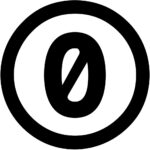
A zero with a line through it, inside a circle.
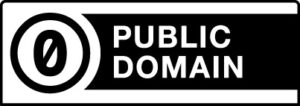
The same icon of a barred 0 with the words Public Domain, circumscribed in a rectangle.

CC0 is a legal tool to enable creators to dedicate their works to the worldwide public domain to the greatest extent possible.


A circle with a C inside and a line running diagonally across it.
The same icon of a circle with a barred C with the words Public Domain, circumscribed in a rectangle.

The Public Domain Mark is a label used to inform the public about the public domain status of a work, and it is often used by museums and archives working with very old works. It marks works known to be free of all copyright restrictions. It is not a legal tool and has no legal effect when applied to a work.

Refer to the handy workflows on how long copyright lasts.


See also Using Wikimedia

Back Home

The author takes no responsibility for the content of this page, which is not intended as binding legal advice. The views are about copyright in the UK Higher Education sector context.

How can I use images?

Images – including photographs, diagrams and other illustrations – available in print or from electronic sources are subject to copyright. It is essential to provide complete acknowledgements or attributions to the source. 

For teaching purposes, using them under the criticism or review or the illustration for instruction exceptions may be permissible. Still, they must be given full acknowledgement or attribution, and care must be taken to ensure they are not further distributed.  

Many sources of free images available on the Internet provide them with permission for use in certain circumstances, including teaching and private study, e.g., Creative Commons licensed images. You should always check the terms and conditions to ensure your use is legal and fully acknowledge your source. 

Images freely available on the internet may still be protected by copyright, and you need permission from the rights-holder before copying them. Not all material marked as free to use on the Internet is meant to be distributed freely: material might be incorrectly annotated like, for example, some posted on Flickr and Wikimedia (for more details, see the related post following the link) – the latter complies with US law and marks some content as Public domain, but it is not considered to be so in our jurisdiction.  

Images in sources covered by the CLA Licence may be scanned and distributed to students. They may also be included in presentations. Report any teaching material that includes scanned images to the digitisation service through the Subject Librarian. 

The author takes no responsibility for the content of this page, which is not intended as binding legal advice. The views are about copyright in the UK Higher Education sector context.

This website was created using Coventry.Domains, a service of the Coventry University Group. The information, views, opinions and discussion contained on this website are those of the author(s) and do not necessarily reflect the views and opinions of the Coventry University Group. For more information on privacy, cookies, takedown requests and more, visit our policies page.