Tag: IP

4. What is the public domain?

The Public Domain (PD) consists of creative works not subject to copyright to which no exclusive intellectual property rights apply (no licence can apply, not even the Creative Commons licences).

Such creative works are publicly available, and new creativity and knowledge may be built from them.

No acknowledgements are legally required, but it is proper to do so to demonstrate academic integrity.

See How do you reference and acknowledge Public Domain material?

PD allows one to do almost anything to a creation; however, a work in the PD…

  • May still be covered by moral rights in some countries
  • Could still be under copyright in some countries (limiting the use of the work where it still applies)
  • May still be subject to other IP restrictions (such as trademark protection, which is independent of copyright protection and may still exist even though the work is in the Public Domain)
  • Any reproduction of work in the public domain may be freshly subject to copyright.

There are two public domain tools:
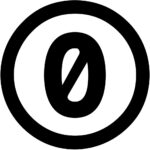
A zero with a line through it, inside a circle.
The same icon of a barred 0 with the words Public Domain, circumscribed in a rectangle.

CC0 is a legal tool to enable creators to dedicate their works to the worldwide public domain to the greatest extent possible.

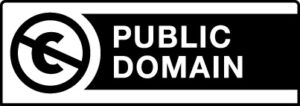
A circle with a C inside and a line running diagonally across it.
The same icon of a circle with a barred C with the words Public Domain, circumscribed in a rectangle.

The Public Domain Mark is a label used to inform the public about the public domain status of a work, and it is often used by museums and archives working with very old works. It marks works known to be free of all copyright restrictions. It is not a legal tool and has no legal effect when applied to a work.

Refer to the handy workflows on how long copyright lasts.


See also Using Wikimedia

Back Home

The author takes no responsibility for the content of this page, which is not intended as binding legal advice. The views are about copyright in the UK Higher Education sector context.
What is Intellectual Property (IP)?

Intellectual Property (IP) is a category of property that includes intangible creations of human intelligence.

It empowers creators to restrict others from using their creative works. It includes copyright, patents and trademarks, which are all protected by specific laws:

  • Copyright is a legal right that grants the creator of original work exclusive rights for its use and distribution
  • Trademarks enable producers of goods and services to protect their reputation, and they safeguard the public by giving them a simple way to differentiate between similar products and services
  • Patents give inventors a time-limited monopoly on their inventions as an exclusive right to exploit them.
  • Design rights protect the visual appearance of an object or part of an object.
  • Other types of IP are trade secrets, publicity rights and moral rights

Go to next Copying and creativity

Back Home

The author takes no responsibility for the content of this page, which is not intended as binding legal advice. The views are about copyright in the UK Higher Education sector context.

This website was created using Coventry.Domains, a service of the Coventry University Group. The information, views, opinions and discussion contained on this website are those of the author(s) and do not necessarily reflect the views and opinions of the Coventry University Group. For more information on privacy, cookies, takedown requests and more, visit our policies page.